LENGER ISLAND
Lenger Island
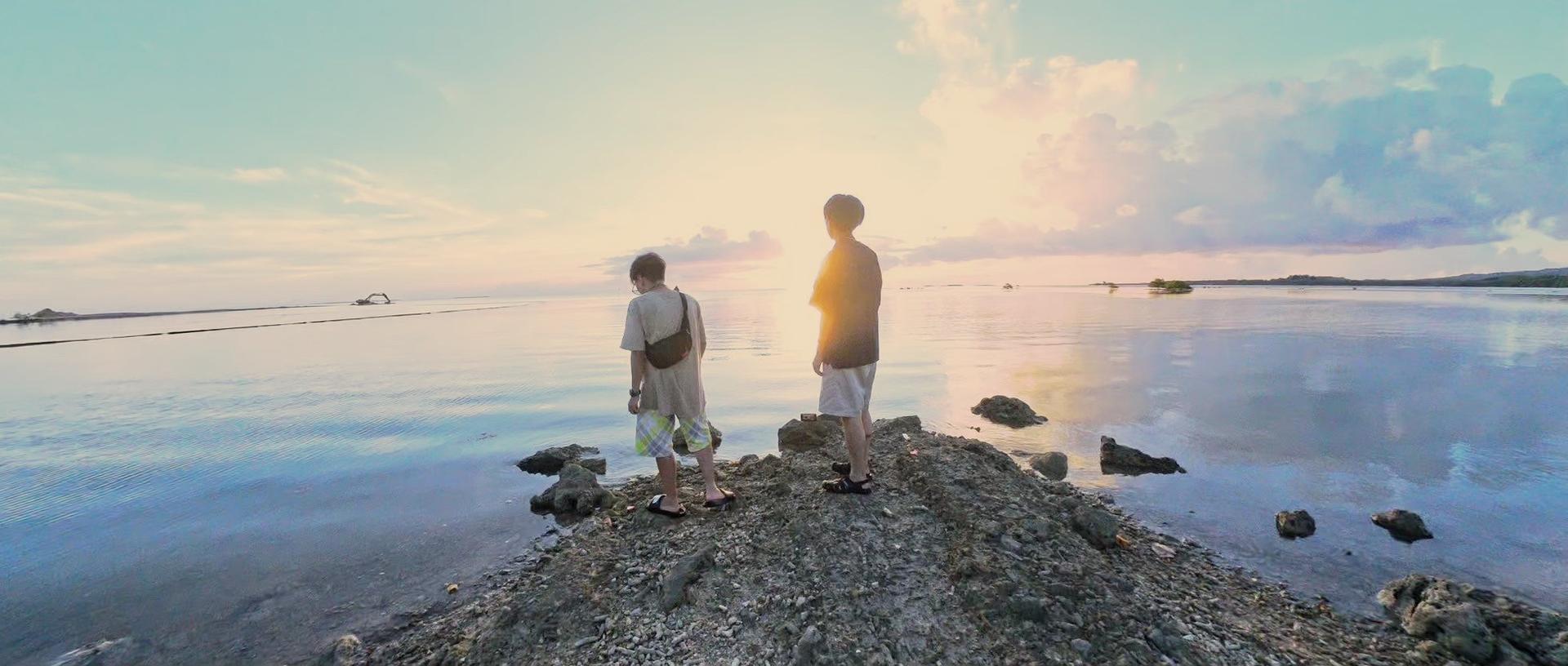
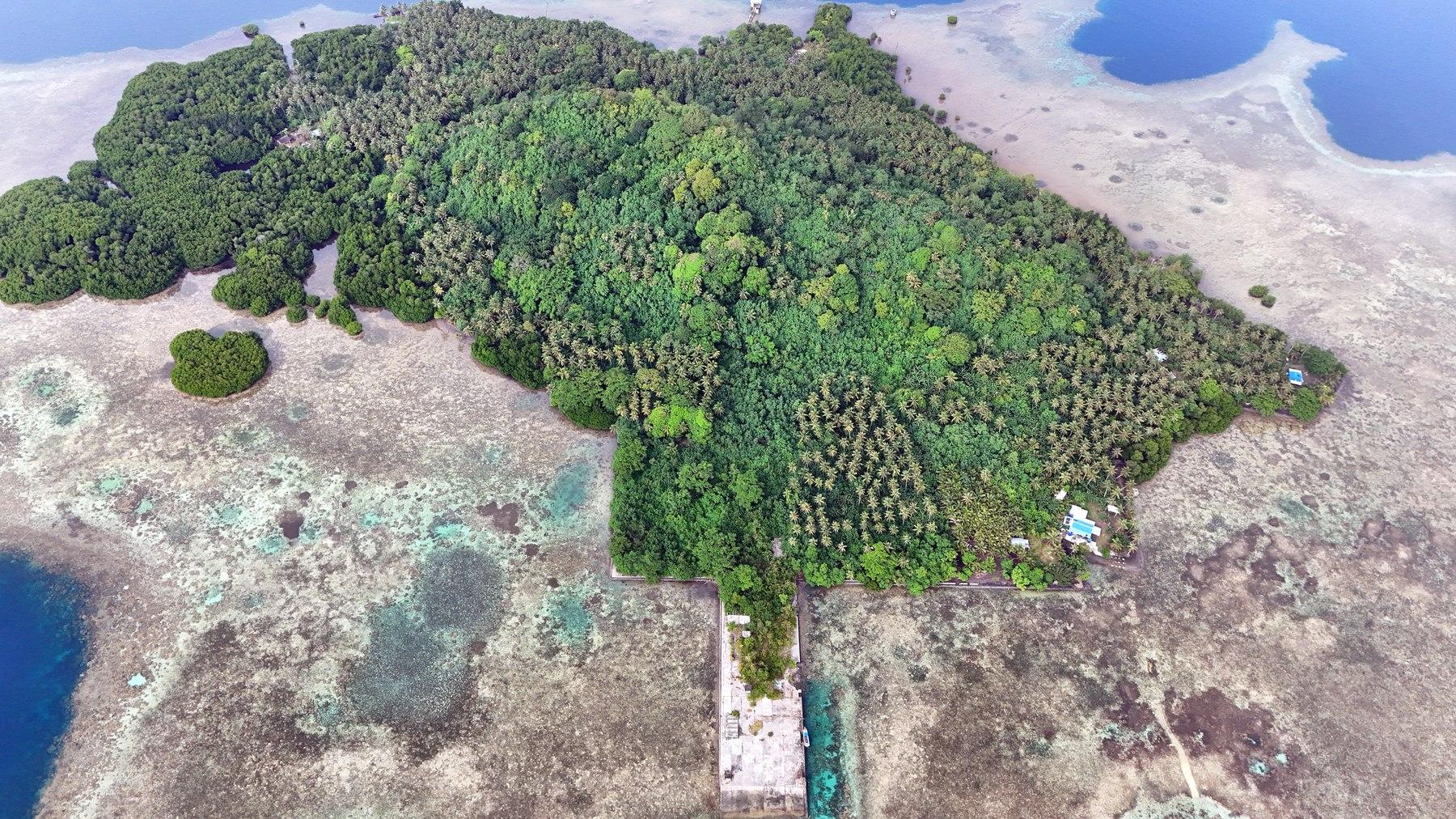
Step ashore on the old seaplane ramp — gun batteries, magazines, and underground fuel bunkers where bats now roost, held in the island's green.
Learn moreIMPORTANT NOTICEOur owner-guide Fujita is currently unwell. All tours and new bookings are suspended for the time being. We will announce our reopening on this website.
JAPAN & POHNPEI
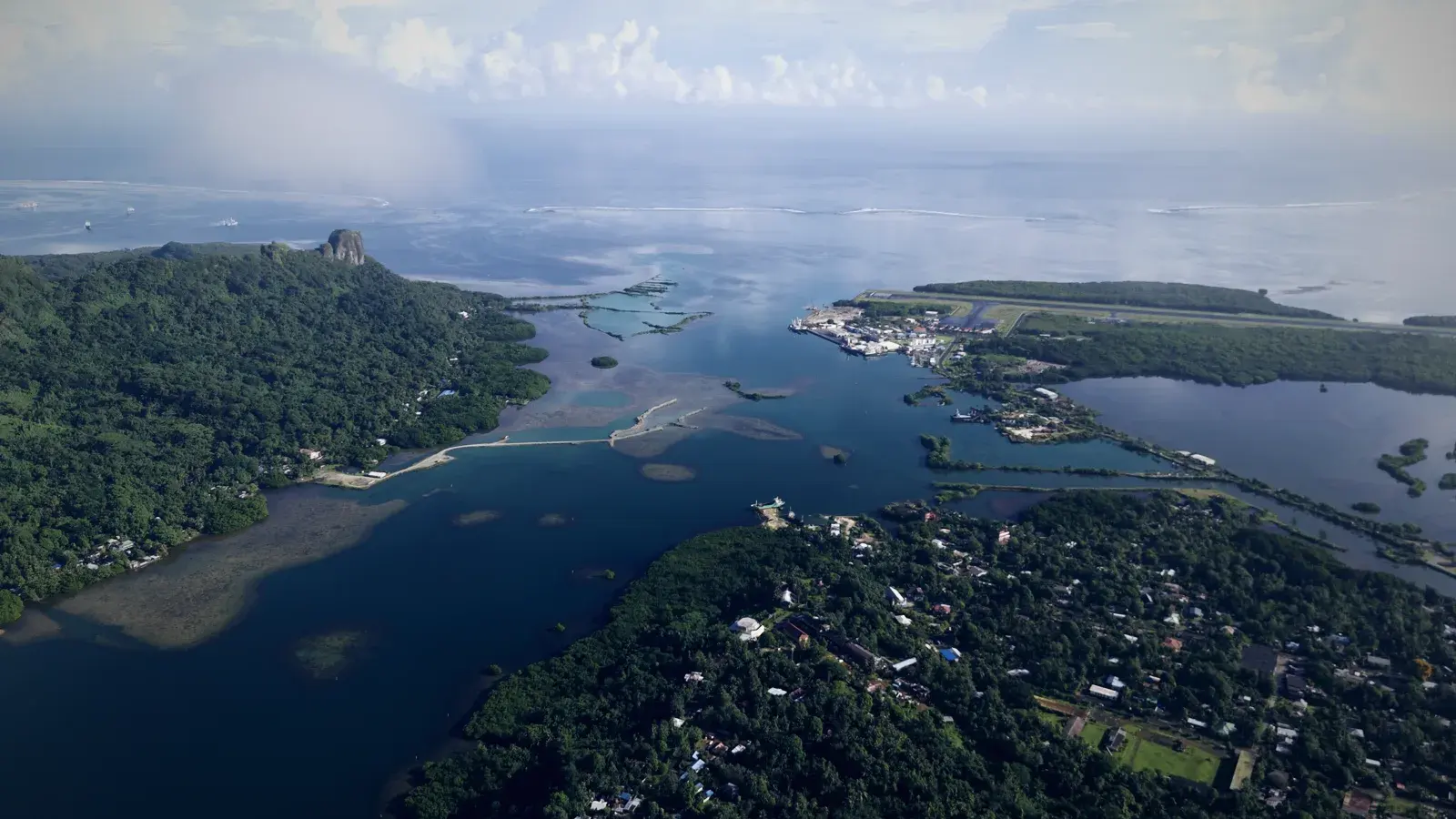
From the colonial era to words and stories — tracing a bond a century long.
From 1914, Pohnpei spent some thirty years under Japanese administration. It is a history of rule — and also an era when people met, married, and everyday lives intertwined.
Roads and buildings, Japanese words alive in daily speech, families with Japanese roots, and stories left behind by a shogi master and a novelist. This page follows the threads that tie Japan and Pohnpei together.
WAR MEMORIES
In 1914 the Japanese navy landed on Pohnpei, and the island became part of the South Seas Mandate under the League of Nations. Schools, hospitals and roads were built, shops lined the streets of Kolonia, and many Japanese crossed the sea to settle.
When the Pacific War began, the island turned into a front line. American air raids devastated the town of Kolonia, and with supplies cut off, soldiers and islanders alike fought hunger. Though no ground battle was fought on Pohnpei, the war changed island life profoundly.
Eighty years on, the traces of that era still rest quietly in the green of the jungle.
War sites you can visit
LENGER ISLAND
Step ashore on the old seaplane ramp — gun batteries, magazines, and underground fuel bunkers where bats now roost, held in the island's green.
Learn more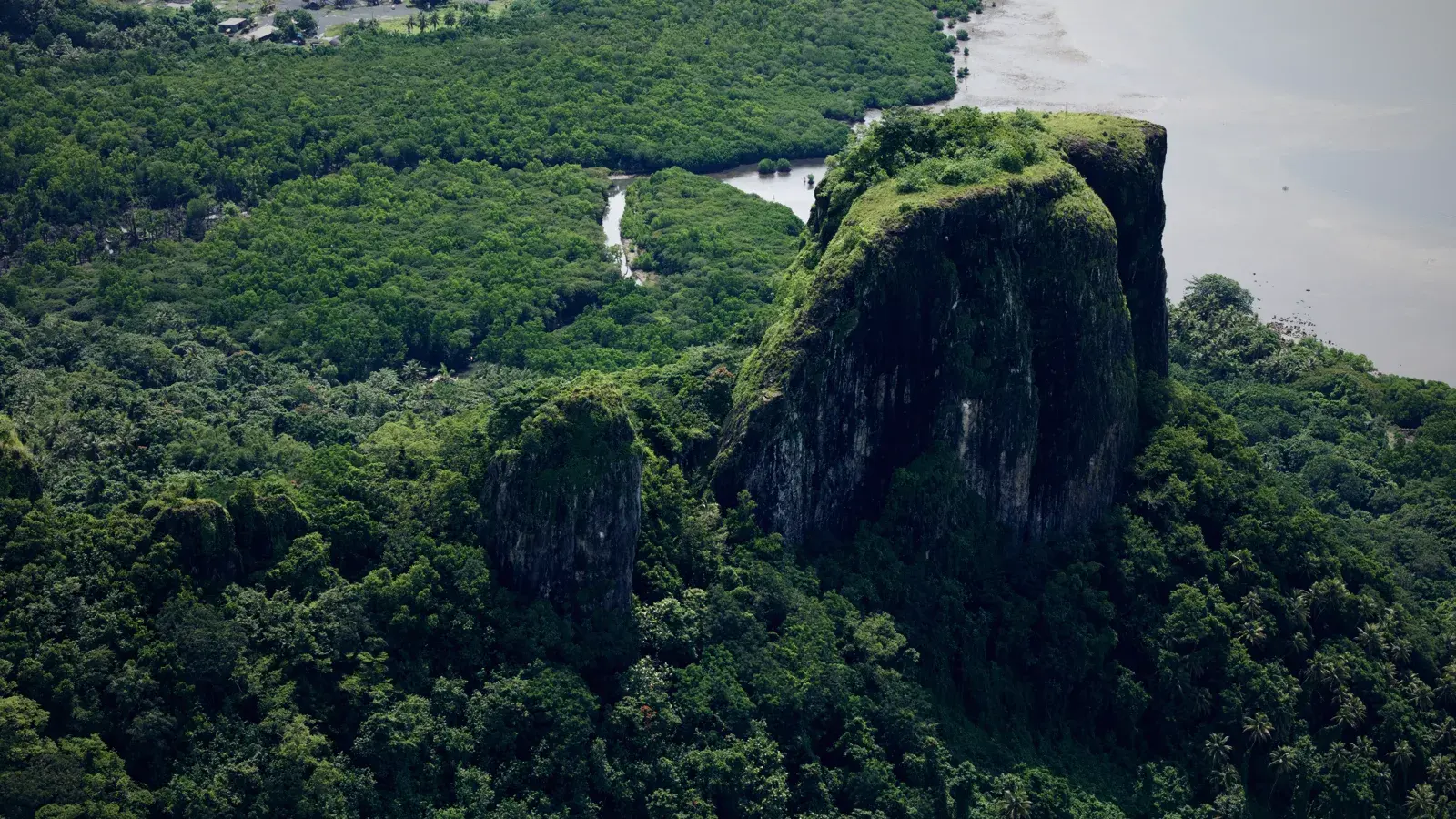
SOKEHS RIDGE
On the crag overlooking Kolonia, anti-aircraft positions remain — visited together with the summit's sweeping view of the reef.
Learn more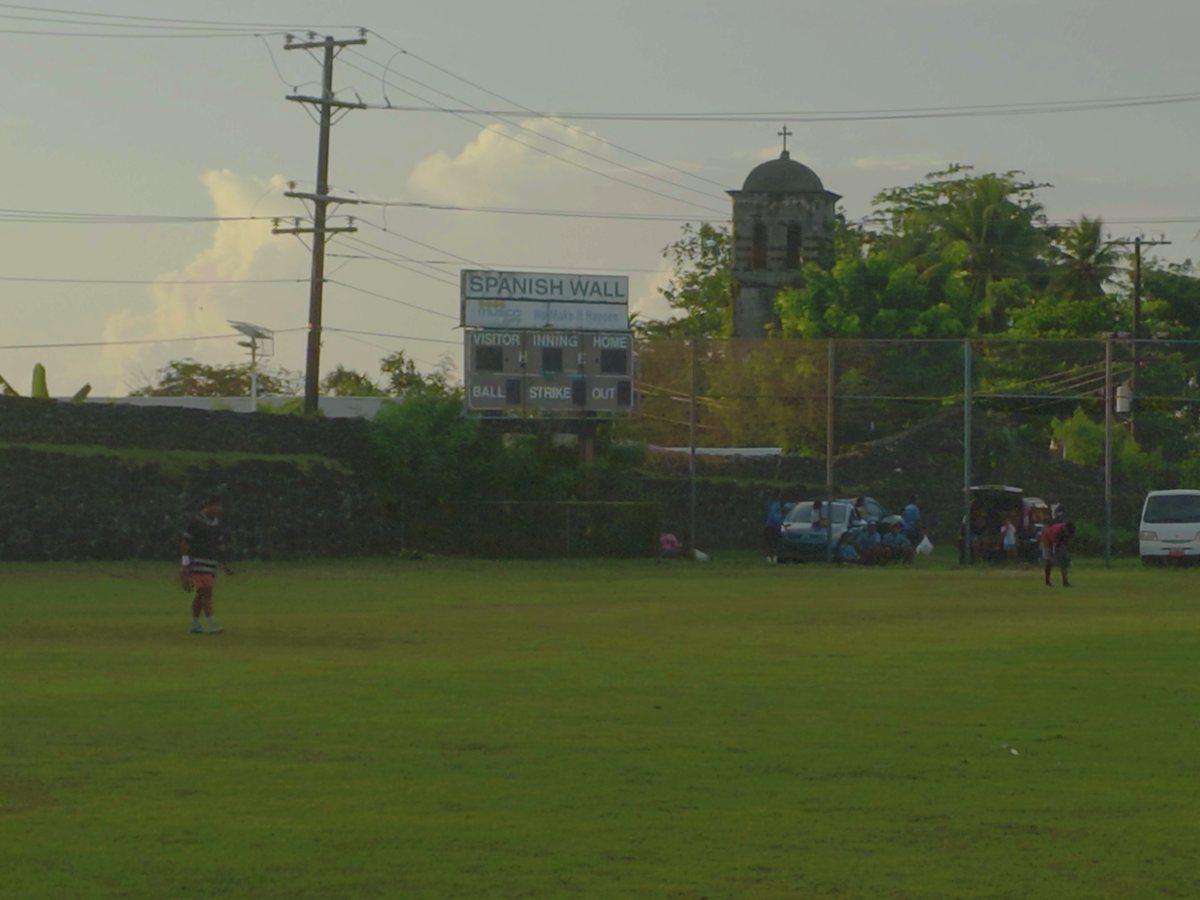
KOLONIA
The town was heavily damaged by air raids late in the war. Here and there in today's peaceful streets, glimpses of that era still surface.
MADOLENIHMW
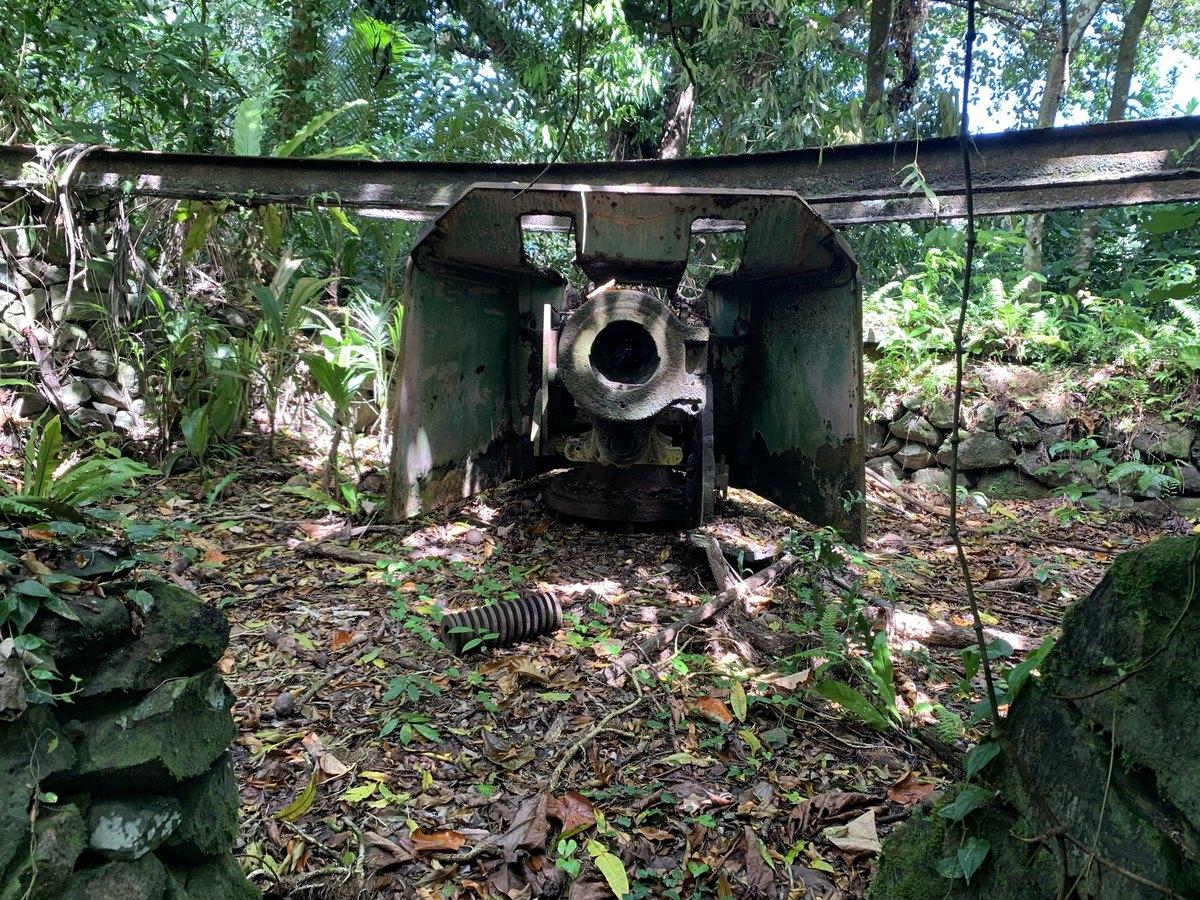
Deep in the jungle of Madolenihmw, on the island's east side, a rusted anti-aircraft gun rests quietly, slowly being reclaimed by the forest — a quiet, powerful sight.
MEMORIALS
On street corners and hillsides, memorial stones still quietly tell of the ties between Japan and Pohnpei.
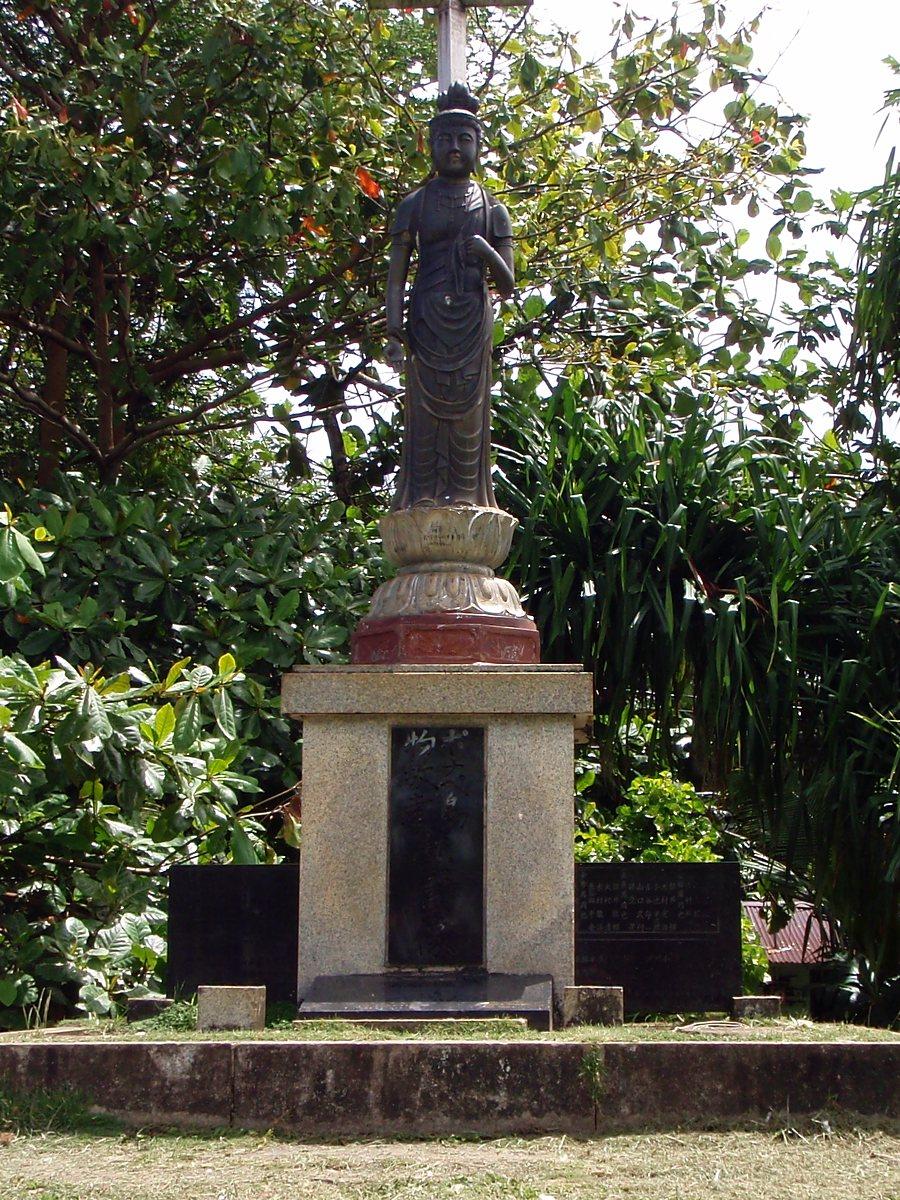
The Ponape-kai Memorial
A Kannon statue in Kolonia, erected in 1979 by the Japan Ponape Association for those who died building the island's future and those lost in the war — and as a prayer for lasting peace.
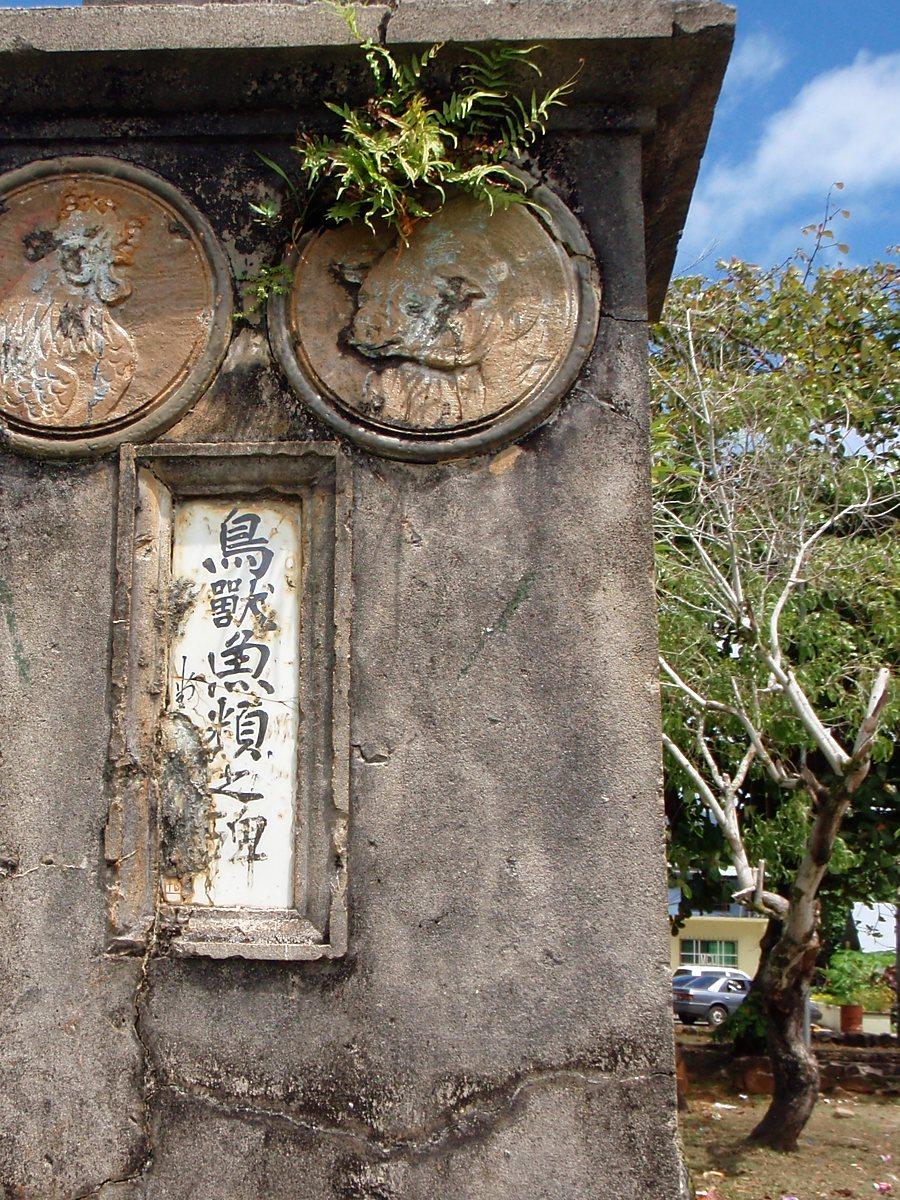
Monument to Birds, Beasts and Fish
A Japanese-era memorial consecrating the birds, animals and fish taken for food — a very Japanese form of prayer, resting quietly on a southern island. Look for the reliefs of a chicken and a pig.
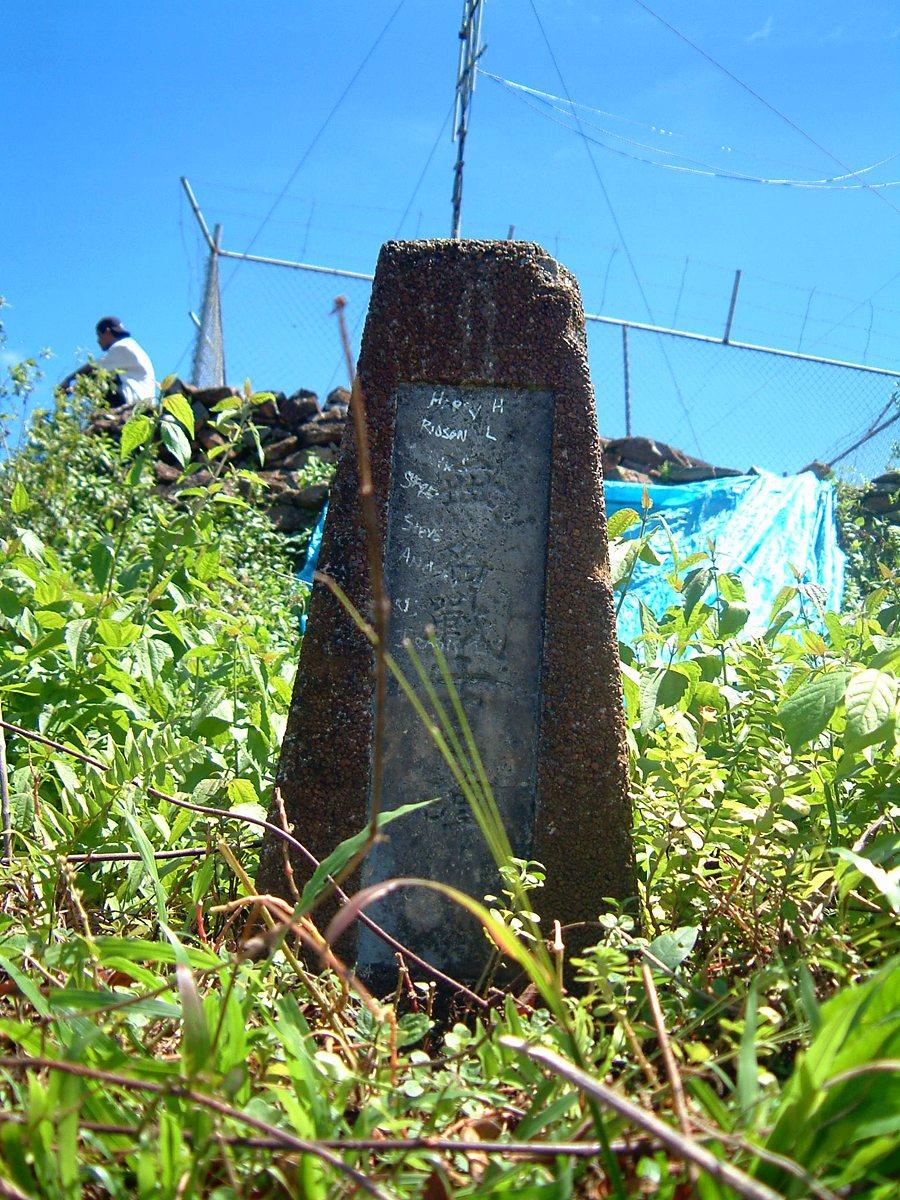
Monument to Unknown Soldiers
A stone stele at the mass grave on Sokehs, quietly mourning soldiers who rest far from home, their names unknown.
During the colonial era, many Japanese made their lives here and built families with islanders. Today, Pohnpei is home to many families bearing Japanese surnames and people of Japanese descent.
Some elders still remember Japanese words. If someone greets you with 'konnichiwa' on your travels — that is a bond between this island and Japan, a hundred years in the making.
LANGUAGE
Under Japanese rule, Japanese was taught in schools and seeped into everyday life. As a result, modern Pohnpeian still keeps many words borrowed from Japanese. For example —
dengki
← denki (電気)
electricity, light
sidohsa
← jidōsha (自動車)
car
sasimi
← sashimi (刺身)
sashimi
soiu
← shōyu (醤油)
soy sauce
dakuwang
← takuan (たくあん)
pickled radish
asi
← hashi (箸)
chopsticks
sohri
← zōri (草履)
flip-flops
iakiu
← yakyū (野球)
baseball
angkasi
← hankachi (ハンカチ)
handkerchief
sakura
← sakura (桜)
hanafuda card game
Some words are giving way to English with the generations, but Japanese still breathes in corners of everyday island life.
PEOPLE
SHOGI LEGEND
A legendary shogi master, and Ponape
Kozo Masuda — the revolutionary shogi master of the Showa era, famed for his creed of 'a lifetime of new moves.' As a young soldier, he was posted to this very island, then called Ponape.
With the skies lost and supplies cut, he waited out air raids in the jungle and fought hunger. Yet the feared invasion never came, and the island was spared. Masuda was repatriated at the end of 1945 and returned to the board.
After the war, summoned by GHQ and asked whether shogi's use of captured pieces amounted to mistreating prisoners, he famously argued back: shogi does not kill its pieces — it gives them a new side to fight for. One root of that defiance lies beneath this island's sky.
LITERATURE
A story of Pohnpei, and Nan Madol
The author Natsuki Ikezawa visited Pohnpei many times from 1977, and from those journeys wrote the linked short-story collection Minami no Shima no Tio ('Tio of the South Island', Bunshun Bunko / winner of the 41st Shogakukan Literature Prize). Its setting is this very island.
The 'Garagargina ruins' in the stories are said to be modeled on the World Heritage site of Nan Madol. The clifftop crag 'Mount Kurampok,' the hotel, and the outer-island scenery are also drawn from real places on Pohnpei.
Read the stories before you visit Nan Madol, and beyond the stonework you may glimpse another story overlaid on the ruins.
War relics, words, and stories — know the background, and the scenery itself changes.
There are stories of Japan and Pohnpei that only guides who share both worlds can tell.